during conception what happens to most zygotes that have too many or too few chromosomes
Mean solar day 0: Pronuclear phase
Fertilization of an egg by a sperm doesn't happen instantaneously. The two gradually unite over the course of 4–6 hours. The first sign of fertilization is the presence of two circular bodies in the egg's center — the female pronucleus and the male person pronucleus. Each contains 23 chromosomes, representing an equal genetic contribution from each parent. In a process known as syngamy, the two cells come up together, creating a jail cell with 46 chromosomes.
Take a quiz
Find out how Flo can help y'all
At this betoken, the fertilized eggs are checked to ensure everything is going according to program. Should at that place be whatsoever abnormalities, it's crucial to catch them before cell division occurs. Even though the embryo would notwithstanding motion through the dividing stages and implant itself in the uterus, it wouldn't result in a feasible pregnancy.
Once the pronuclei join, fertilization is fully completed and a zygote is formed. The entire process — from the moment the sperm and egg connect to the moment cell division begins — takes approximately xxx hours.
Side by side, the fertilized egg will divide into a two-celled embryo. It continues to duplicate and divide every 10 to 12 hours.
Days 1–3: Cleavage stage
Although the cells are repeatedly dividing during the cleavage stage, the zygote isn't growing yet. Genetic material is being replicated in each cell, but the overall book of the zygote remains the aforementioned.
The first few days of IVF require constant supervision. As cell division progresses, a culture of fertilized eggs is taken for grading. At this point, zygotes typically have between six and x cells. The presence of too many jail cell fragments without any genetic textile could indicate a slim run a risk for viability.
Days iii–5: Morula phase
One time the cleavage stage ends, the morula stage begins. The morula stage prepares the zygote (currently 16 cells, yet undergoing sectionalization) to grow. The cells arrange themselves into a hollow circle to facilitate transitioning into the blastocyst phase.
Day 5: Blastocyst stage
This is considered the last phase of zygote development. The arrangement described to a higher place allows for the germination of two layers of cells. The outer band provides the tissues needed for a successful pregnancy, including your placenta and amniotic sac. Inside this protective outer ring lies the grouping of cells that volition eventually develop into a babe.
Now, the zygote starts to aggrandize, pushing confronting its protective shell and preparing itself for implantation. Once the crush is broken, the zygote hatches and adheres to your uterine wall. This is when the zygote develops into an embryo.
Understanding embryo grading
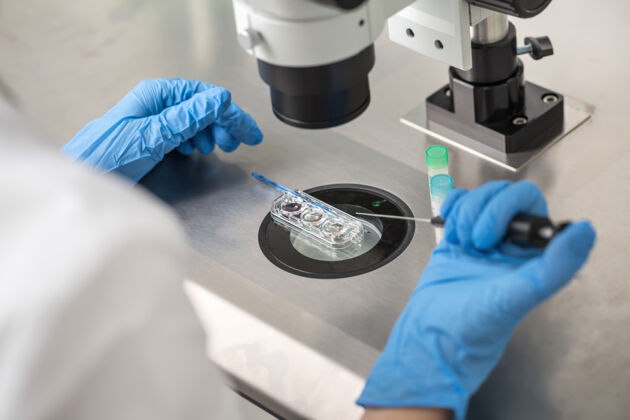
Embryo grading is a tool used past IVF specialists to better your chances of formulation and pregnancy. Your IVF lab will carefully grade your embryos, selecting the ones with the best potential for viable implantation. Grading occurs on both twenty-four hours iii and day v, according to dissimilar sets of criteria. Implantation is usually done on either day 3 or day 5.
Initially, each fertilized egg is observed to place the best zygote. Zygotes are evaluated in two ways. The outset examines the contact bespeak between nuclear membranes, while the second examines the cell composition of the zygote.
Considered to be of higher quality, form 1 zygotes incorporate at least iv similarly sized cells, and grade 2 zygotes contain two to four. Grade 3 zygotes, withal, take fewer than ii blastocysts, which may betoken a lack of viability.
Your IVF lab will carefully grade your embryos, selecting the ones with the best potential for viable implantation. Grading occurs on both twenty-four hour period 3 and solar day 5, according to dissimilar sets of criteria.
At the day three screening, embryos are observed under a microscope, and the amount of cytoplasm in each cell is measured. Those with a greater number of cells containing genetic material and a good ratio of cytoplasm to nuclei receive a higher grade. Furthermore, cell symmetry is assessed — the more than symmetrical a prison cell is, the ameliorate.
By the time day five screening begins, the cells are growing, and the zygote is well-nigh ready to break out of its trounce. At this bespeak, a alphabetic character course must exist assigned to both the outer ring of cells and the group of cells inside the band. Both are required for a viable pregnancy.
Grading too considers your age when y'all're trying to conceive, fertility history, and the phase of your wheel when selecting the optimal moment for implantation. The platonic number of embryos will most probable be transferred on day 5, and any remaining fully-adult blastocysts may be frozen for future use. Those which oasis't nevertheless achieved a desirable score are cultured for one more than solar day.
Why chromosome screening is of import
The decision to carry chromosome screening is a personal ane to consider in advance of IVF. It can only exist washed when the embryo is outside of your trunk, during the five-mean solar day window between fertilization and implantation.
If either yous or your partner have a family unit history of chromosomal disorders, information technology'due south wise to take screening into consideration. Screening can spot genetic atmospheric condition such equally muscular dystrophy, sickle cell anemia, cystic fibrosis, and Tay-Sachs.
If yous're using your eggs and donated sperm, screening is particularly useful, since y'all may not have admission to the donor's full medical history. Screening is too recommended for women over 35 who have had repeated miscarriages, failed IVF treatments, or pregnancies involving chromosomal abnormalities.
If either you or your partner take a family history of chromosomal disorders, it'due south wise to have screening into consideration. Screening can spot genetic atmospheric condition such as muscular dystrophy, sickle cell anemia, cystic fibrosis, and Tay-Sachs.
Screening occurs on days five and six, after fertilization, and will not impact your chances for feasible implantation. The embryo is cryogenically frozen and Deoxyribonucleic acid is extracted for analysis. Chromosome screening is not intended for identifying sure concrete characteristics or creating "designer babies."
The early stages of IVF treatment tin be an exciting time for potential parents. Agreement the various phases of embryo development can offer peace of mind during this complex process.
Source: https://flo.health/getting-pregnant/trouble-conceiving/fertility-treatments/ivf-embryo-development
0 Response to "during conception what happens to most zygotes that have too many or too few chromosomes"
Post a Comment